
Judgement for the case Donoghue v Stevenson. The “neighbour principle” established a duty to take reasonable care to prevent foreseeable harm to those directly affected by one’s actions or omissions. This “neighbour” is not just someone in physical proximity but anyone who could be reasonably contemplated as being affected by one’s actions.. When Donoghue v Stevenson came before the Appellate Committee of the House of. Lords, Lord Atkin suggested that it raised the most important question they had ever. been asked to consider.2 Now on its ninetieth anniversary, we can say with confidence. that Donoghue was, at the very least, one of the most important cases of the twentieth.
Donoghue v Stevenson (1932) Case Summary and Legal Principles

Donoghue v Stevenson 1932 Duty of Care & the Snail in the Bottle Law Case Summary Reasoning
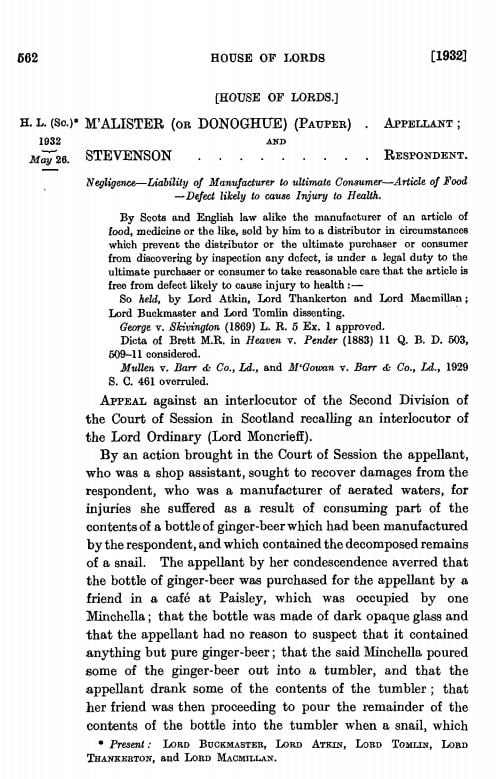
donoghue v stevenson summary Joanne Paige
![Donoghue v. Stevenson Citation [1932] A.C. 562, [1932] UKHL 100, 1932 S.C. (H.L.) 31, 1932 S.L](https://legalvidhiya.com/wp-content/uploads/2023/04/1-1.png "Donoghue v. Stevenson Citation [1932] A.C. 562, [1932] UKHL 100, 1932 S.C. (H.L.) 31, 1932 S.L")
Donoghue v. Stevenson Citation [1932] A.C. 562, [1932] UKHL 100, 1932 S.C. (H.L.) 31, 1932 S.L

Donoghue V Stevenson 1932 UKHL 100 26 May 1932 PDF Negligence Duty Of Care

Case brief of Donoghue v. Stevenson (1932) All ER Rep. 1 BareLaw

Case study Donoghue v. Stevenson (1932)
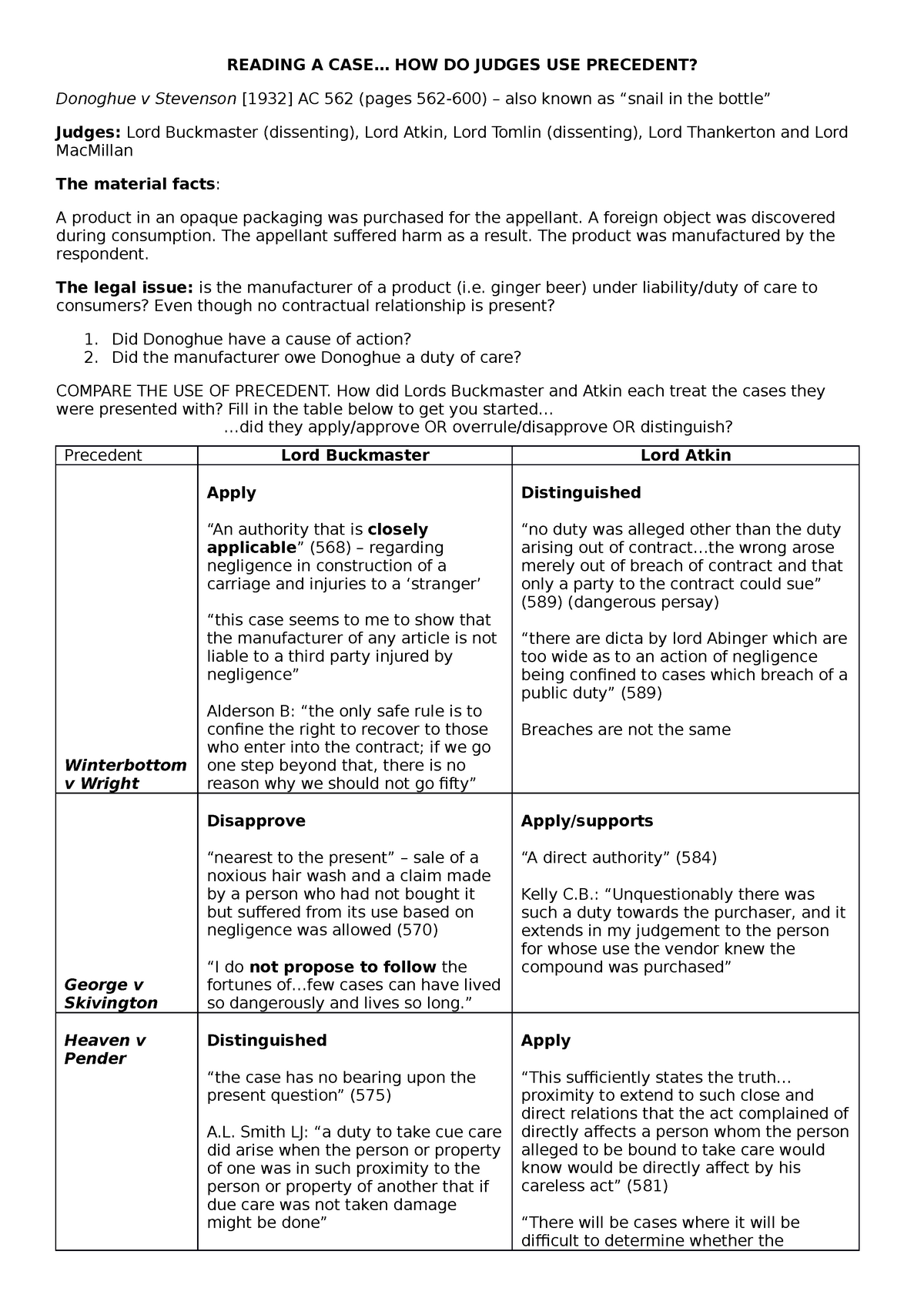
Donoghue v Stevenson Summary READING A CASE… HOW DO JUDGES USE PRECEDENT? Donoghue v

Donoghue v Stevenson (1932) ALevel Law Key Case Summaries Tort YouTube
Donoghue v Stevenson Carlil & Carbolic Law Study Resources

DONOGHUE V STEVENSON 1932 AC 562 PDF

Donoghue v. Stevenson New York Bar Picture Book

Lecture 1 Case Donoghue v Stevenson Donoghue v Stevenson Case Report 1932 HL 31 Donoghue v

Donoghue v Stevenson YouTube
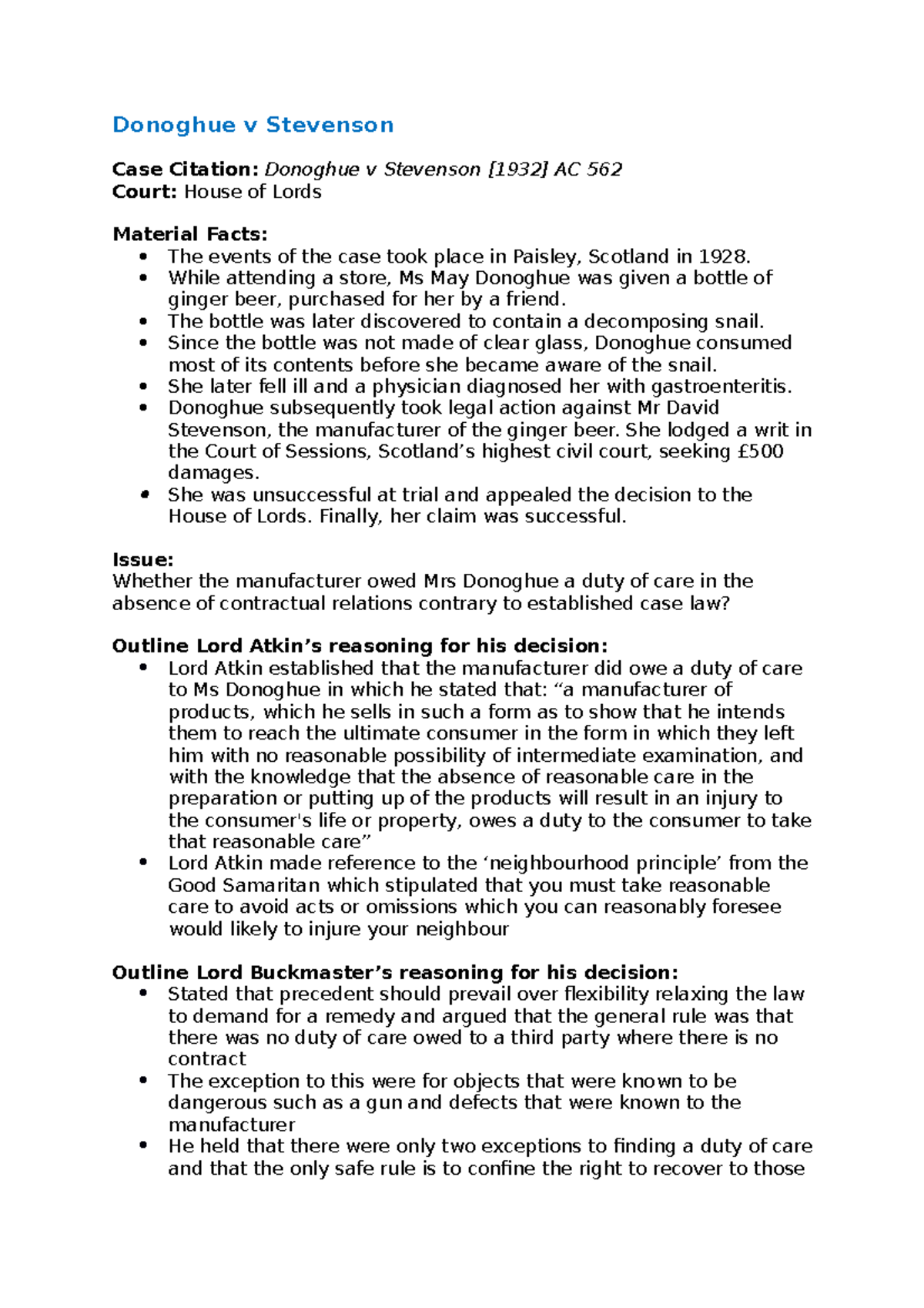
Donoghue v Stevenson Case Summary Donoghue v Stevenson Case Citation Donoghue v Stevenson
Full case law of Donoghue v. Stevenson
DONOGHUE V. STEVENSON, (1932) AC 562 (Case Commentary)

CaseDonoghue v StevensonNegligenceWIKI

CASE ANALYSIS DONOGHUE v. STEVENSON (1932) AC 562
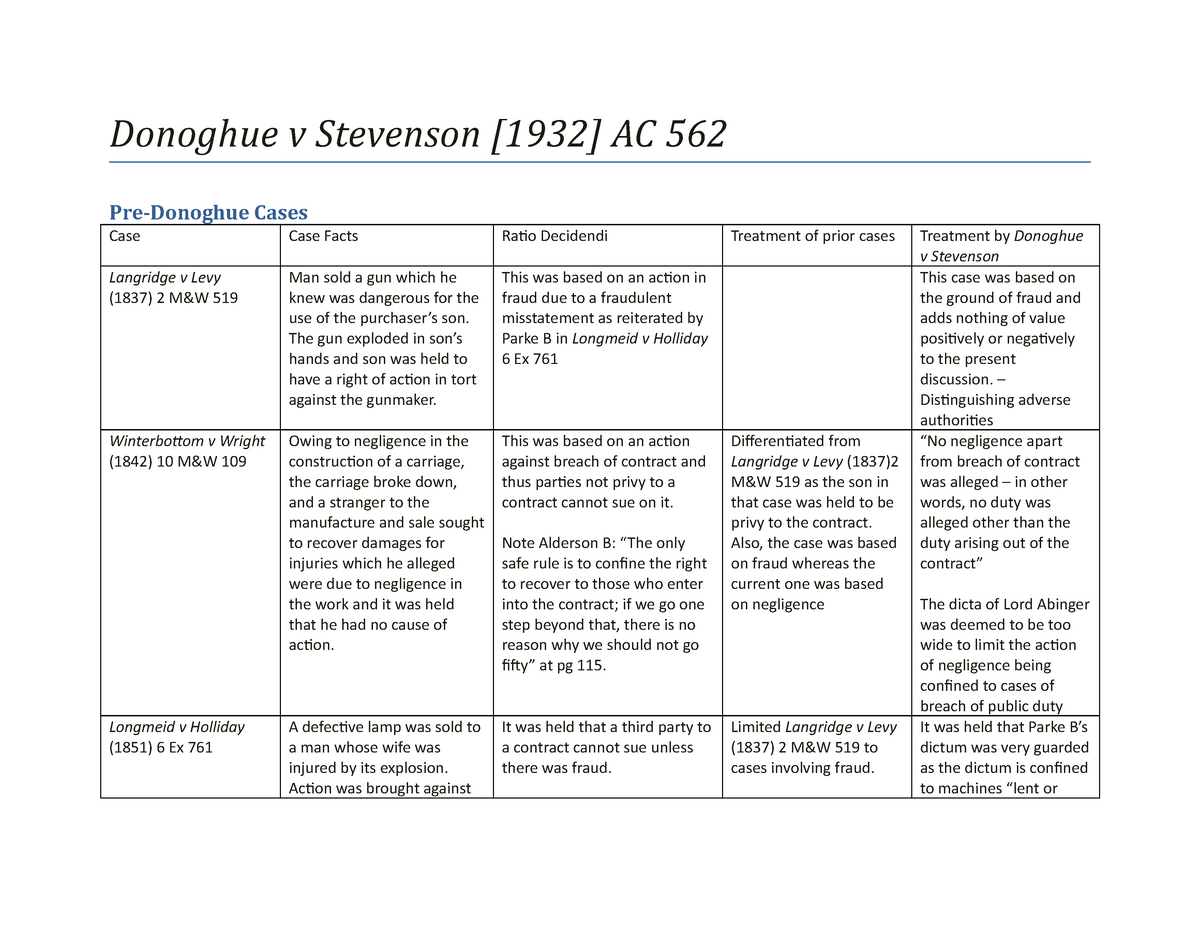
Donoghue v Stevenson Summary of a very important case Donoghue v Stevenson AC 562 Cases Case
Prior to Donoghue v Stevenson, tort law consisted of specific torts where a duty of care is recognised, such as property torts, the tort of trespass etc. Donoghue v Stevenson changed the law of tort by creating the tort of negligence which has a general duty of care. Now out: model 1st class 🏆 examination answers from Oxford.. The case of Donoghue v Stevenson was the first in which an individual won compensation for harm caused by another’s negligence. This set a precedent whereby individuals could now be held accountable for their actions and, if found guilty, were liable to pay damages to injured parties. As a result of this ruling, it became easier for those.